
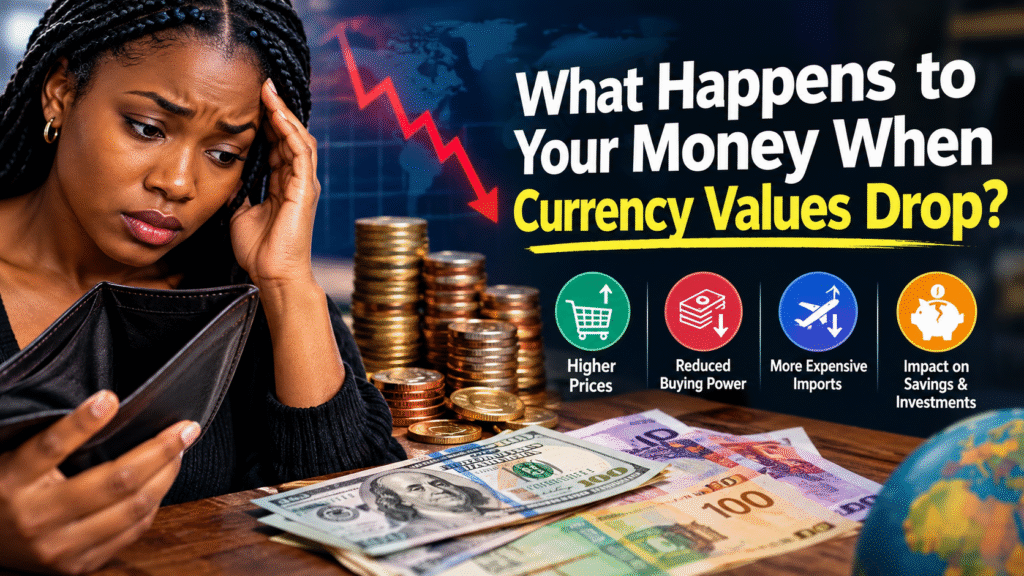
What Happens to Your Money When Currency Values Drop?
Currency values don’t stay still. They rise and fall constantly – sometimes gradually, sometimes dramatically – in response to economic events, political decisions, and global market forces. When a currency drops in value, the effects ripple through everyday life in ways that most people don’t immediately connect to exchange rates.
Whether you’re a traveler, a saver, a business owner, or simply someone who buys goods online, currency depreciation affects you. Here’s exactly how – and what you can do about it.
What Does It Mean When a Currency “Drops”?
A currency drops in value when it can buy fewer units of another currency than it could before. This is called depreciation (when it happens through market forces) or devaluation (when a government deliberately lowers its currency’s value).
Example:
- Last month: 1 USD = 0.92 EUR
- Today: 1 USD = 0.87 EUR
- The Dollar has depreciated against the Euro – it now buys fewer Euros
For everyday people, this shows up as prices changing – even when the price tag in the local store hasn’t moved.
How Currency Drops Affect You Directly
1. Imports Become More Expensive
This is the most immediate and widespread effect of a depreciating currency. When your currency is worth less, goods purchased from other countries cost more – because you need more of your currency to buy the same amount of foreign currency to pay for them.
Real-world examples of what gets more expensive:
- Electronics – most consumer electronics are manufactured in Asia and priced in USD or local currencies. A weaker Euro, for example, makes iPhones, Samsung TVs, and laptops more expensive across Europe.
- Fuel and energy – oil is priced globally in US Dollars. When any currency weakens against USD, fuel costs rise – affecting not just gas prices but the cost of heating, manufacturing, and transportation of every product you buy.
- Food – many food commodities (wheat, corn, soybeans, coffee) are traded globally in USD. A weaker local currency makes these more expensive to import, pushing up grocery prices.
- Medications and medical equipment – pharmaceutical supply chains are global. Currency depreciation can affect drug prices and healthcare costs.
This is why inflation often follows currency depreciation – when imports cost more, businesses pass those costs to consumers.
2. International Travel Gets More Expensive
If your home currency weakens against the currency of your destination, your trip becomes more expensive – even if nothing in that country has changed price.
Example: A British traveler visiting the US.
- When GBP/USD = 1.35, a $200 hotel night costs them £148
- When GBP/USD = 1.20, that same $200 hotel night now costs them £167
Same hotel. Same rate. £19 more expensive – purely because of the exchange rate.
This is why exchange rates matter so much for travel planning. A currency drop of 10% effectively makes your international trip 10% more expensive overnight.
3. Your Savings Lose International Purchasing Power
If you hold savings in a currency that depreciates, those savings buy less internationally – even if the number in your bank account hasn’t changed.
This is particularly relevant for:
- Expats who plan to retire or move abroad – if your home currency weakens, your retirement funds stretch less far in your destination country
- People with savings in weak or volatile currencies – in countries experiencing significant currency weakness, maintaining savings in a stable currency (USD, EUR, CHF) or assets like gold can protect purchasing power
- Remote workers paid in foreign currencies – if the currency you’re paid in depreciates relative to your home currency, your effective income falls
4. Foreign Debt Becomes Harder to Repay
This is particularly relevant for businesses and governments – but individuals with foreign currency loans or mortgages face it too.
If you borrowed money in a foreign currency (say, a mortgage in Swiss Francs when you live in Hungary – a situation that affected hundreds of thousands of Eastern European homeowners in the 2010s) and your home currency depreciates, your loan effectively gets larger in local currency terms – even if you haven’t borrowed more.
5. Online Shopping from Foreign Retailers Gets More Expensive
If you regularly shop from international websites – US retailers, UK brands, Japanese stores – a weaker home currency means those purchases cost you more, even if the foreign retailer hasn’t changed their prices.
This is why savvy international shoppers monitor exchange rates and time larger purchases for periods when their home currency is relatively strong. Use our free currency converter to check rates before making international purchases.
How to Protect Yourself When Currency Values Drop
You can’t control exchange rates – but you can manage your exposure to them.
For Travelers:
- Book and pay for accommodation in advance when your currency is strong – locking in today’s exchange rate for a future expense
- Use a Wise or Revolut card that converts at the real rate, minimizing losses to markups on top of already-unfavorable rates
- Monitor rates with our free converter and convert travel funds when the rate is relatively favorable
For International Shoppers:
- Time major international purchases for periods when your home currency is relatively strong
- Set rate alerts on Wise or Revolut to get notified when a favorable rate hits
- Always pay in the seller’s currency – Dynamic Currency Conversion adds an extra layer of cost on top of already-poor rates
For Businesses:
- Invoice in your own currency where possible – this transfers currency risk to the buyer
- Use forward contracts through services like OFX to lock in today’s exchange rate for future payments – protecting your margins from rate movements
- Maintain reserves in stable currencies (USD, EUR, CHF) if your home currency is volatile
For Savers in Volatile Currency Countries:
- Consider holding a portion of savings in stable foreign currencies or assets
- Consult a qualified financial advisor about currency risk specific to your situation
The Bottom Line
When a currency drops in value, the effects are real and tangible – higher import prices, more expensive travel, reduced international purchasing power, and greater debt burdens for those with foreign currency exposure.
But understanding these effects gives you power. When you know how exchange rates work and which tools to use, you can minimize unnecessary losses, time your transactions strategically, and avoid the hidden costs that catch most people off guard.
Check live exchange rates anytime with our free currency converter – and stay ahead of the moves that matter to you.
CurrencySwitchNow is not a financial advisor. Exchange rates fluctuate – always verify before making financial decisions.